


Sensory Integration and Gross Motor Skill Learning: Choosing the Right Play Equipment for Kids
Children learn through movement.
Running, jumping, balancing, climbing, spinning, throwing and reaching might look like simple play, but these activities give children opportunities to practise controlling their bodies, responding to movement and developing new physical skills.
This is where sensory integration and gross motor skill learning can overlap.
For parents, educators and therapists, however, choosing play equipment can quickly become confusing. A swivel chair, trampoline, balance board and sensory swing all provide movement, but they do not create exactly the same play experience.
The best choice is therefore not necessarily the biggest, most colourful or most expensive piece of equipment.
It is the one that suits the child, the activity, the available space and the skill you want to encourage.
Happy Square offers a dedicated Sensory Integration / Gross Motor Skill Training range in Australia, including swivel chairs, trampolines, balance equipment, scooter boards, swings and other movement-based play tools for families, schools and clinics.
This guide explains how to compare those options more thoughtfully.
What Are Gross Motor Skills?
Gross motor skills involve movements that use the larger muscles of the body.
Healthdirect describes gross motor development as involving large body movements such as rolling, sitting, crawling and walking. As children grow, this expands into activities such as running, jumping, climbing, balancing, throwing and other whole-body movements.
Gross motor skills are involved when a child:
- Runs across the playground
- Jumps with two feet
- Climbs stairs
- Balances on one leg
- Catches or throws a ball
- Rides a scooter
- Bounces on a trampoline
- Crawls through a tunnel
- Pushes or pulls an object
- Changes direction while moving
These skills develop over time through everyday movement, play and opportunities to practise.
They are not learned from one specific toy.
Instead, different types of play can give children opportunities to practise different combinations of balance, coordination, strength and body control.
https://happysquare.com.au/collections/kids-gym/products/sensory-integration-swivel-chair
What Does Sensory Integration Mean?
The term sensory integration is often used broadly when talking about how children receive, organise and respond to sensory information, including movement and information about body position.
It is important, however, to distinguish general sensory play from Ayres Sensory Integration® (ASI).
The Royal College of Occupational Therapists describes ASI as a specific, play-based therapeutic intervention delivered by a therapist with appropriate postgraduate training. Buying a sensory product for home or school is therefore not the same thing as providing sensory integration therapy.
For parents choosing play equipment, a more practical question is:
What type of movement or sensory experience will this equipment allow my child to explore?
That might include:
- Spinning
- Bouncing
- Rocking
- Balancing
- Swinging
- Crawling
- Pushing
- Pulling
- Changing body position
- Moving against resistance
This makes choosing equipment much easier than looking for one product that claims to “do everything”.
Why Movement-Based Play Matters
Physical play gives children opportunities to practise movement repeatedly in a way that feels enjoyable rather than instructional.
Australian guidance recommends substantial daily physical activity for children.
According to Healthdirect, children aged 1–5 years should be physically active for at least three hours across the day, with preschool-aged children including at least one hour of energetic activity. Children aged 5–17 years should aim for at least one hour of physical activity each day.
Australian Physical Activity Data
| Age | Recommended Physical Activity |
|---|---|
| Birth–1 year | Supervised floor-based activity, including at least 30 minutes of tummy time for babies not yet mobile |
| 1–5 years | At least 3 hours spread across the day |
| Preschool age | The 3 hours should include at least 1 hour of energetic activity |
| 5–17 years | At least 1 hour of physical activity each day |
Healthdirect also reports that fewer than one in four Australian children aged 5–14 achieve the recommended amount of physical activity every day.
This does not mean children need specialised equipment to be active.
Walking, playgrounds, dancing, ball games, cycling and outdoor play are all valuable.
Movement equipment can simply provide another way to make physical play accessible, interesting and repeatable, particularly indoors or within structured home, school or clinic environments.
Choosing Equipment by the Skill You Want to Practise
Instead of starting with:
“Which sensory toy should I buy?”
try asking:
“What type of movement would I like the child to practise?”
Here is a practical starting guide.
| Equipment Type | Main Movement | Skills Commonly Practised |
| Swivel Chair | Spinning / rotation | Balance, body control, spatial awareness |
| Trampoline | Jumping / bouncing | Leg strength, coordination, balance |
| Balance Board | Weight shifting | Balance, core control, coordination |
| Wobble Cushion | Active sitting | Postural adjustment, balance |
| Scooter Board | Pushing / pulling / travelling | Coordination, upper-body involvement, motor planning |
| Sensory Swing | Swinging / rocking | Movement awareness, balance |
| Therapy Ball | Rolling / balancing | Core control, balance, body positioning |
| Play Parachute | Lifting / running / group movement | Coordination, movement timing, cooperative play |
| Sensory Tunnel | Crawling / pushing | Whole-body movement, spatial awareness |
No single product is automatically better than another.
The correct choice depends on what the child enjoys, what they can safely use and what you want the activity to involve.
1. Swivel Chairs: For Rotation and Body Control
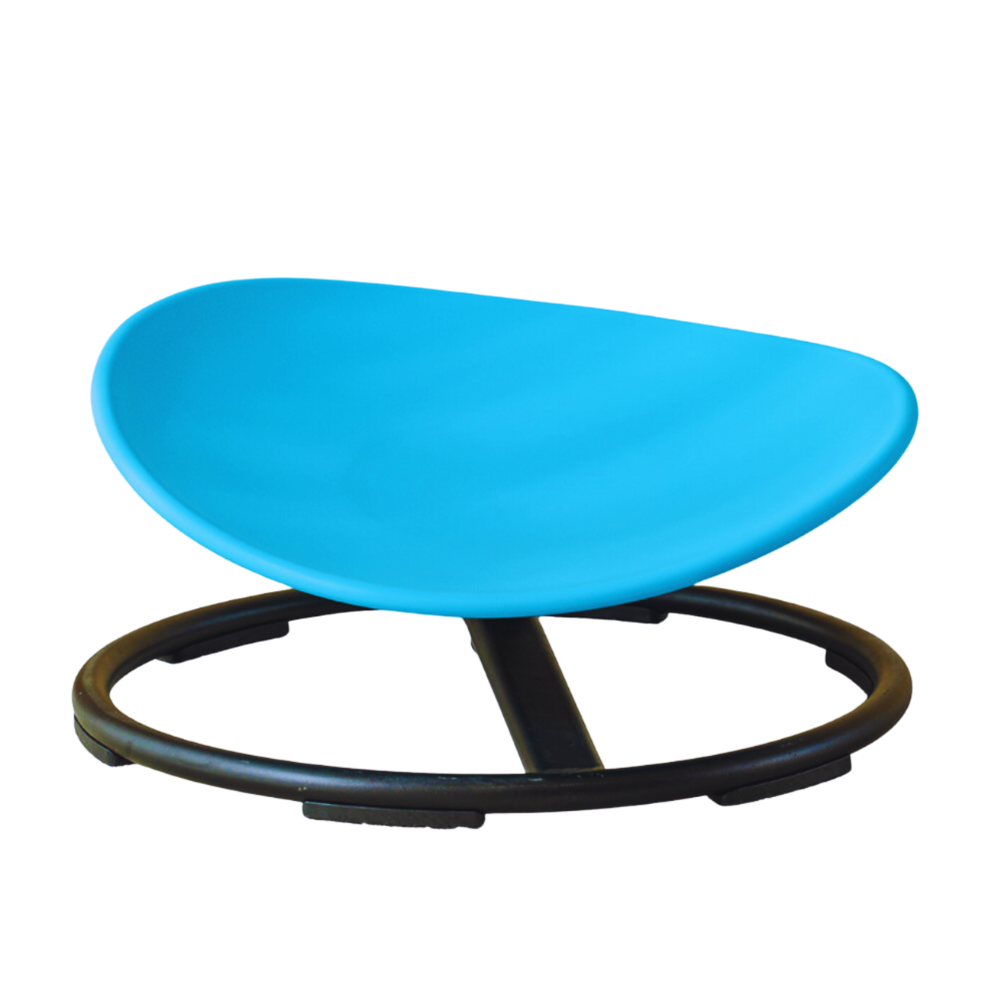
A sensory swivel chair creates rotational movement.
Happy Square's Sensory Integration Vestibular Stimulation Swivel Chair provides 360-degree rotation and is designed for movement activities involving balance, coordination, core control and spatial orientation. The current model has a diameter of approximately 55 cm, a height of 19–25.5 cm depending on the version and a stated maximum weight capacity of 75 kg.
A swivel chair may be worth considering when the activity involves:
- Controlled spinning
- Changing body position
- Maintaining balance while moving
- Core engagement
- Stop-and-start movement games
Rather than encouraging children to spin continuously, adults can create structured activities.
For example:
Turn and Stop
Rotate gently, stop, and ask the child to identify an object in the room.
Reach and Rotate
Place soft objects around the child so they rotate and reach toward different directions.
Slow and Fast Comparison
Where appropriate and safely supervised, explore how different movement speeds feel rather than simply maximising speed.
The aim is purposeful play, not simply spinning as much as possible.
2. Trampolines: For Jumping, Balance and Coordination
Jumping is one of the most recognisable gross motor activities.
A trampoline allows a child to repeatedly practise:
- Jumping
- Landing
- Maintaining balance
- Coordinating both sides of the body
- Controlling body position
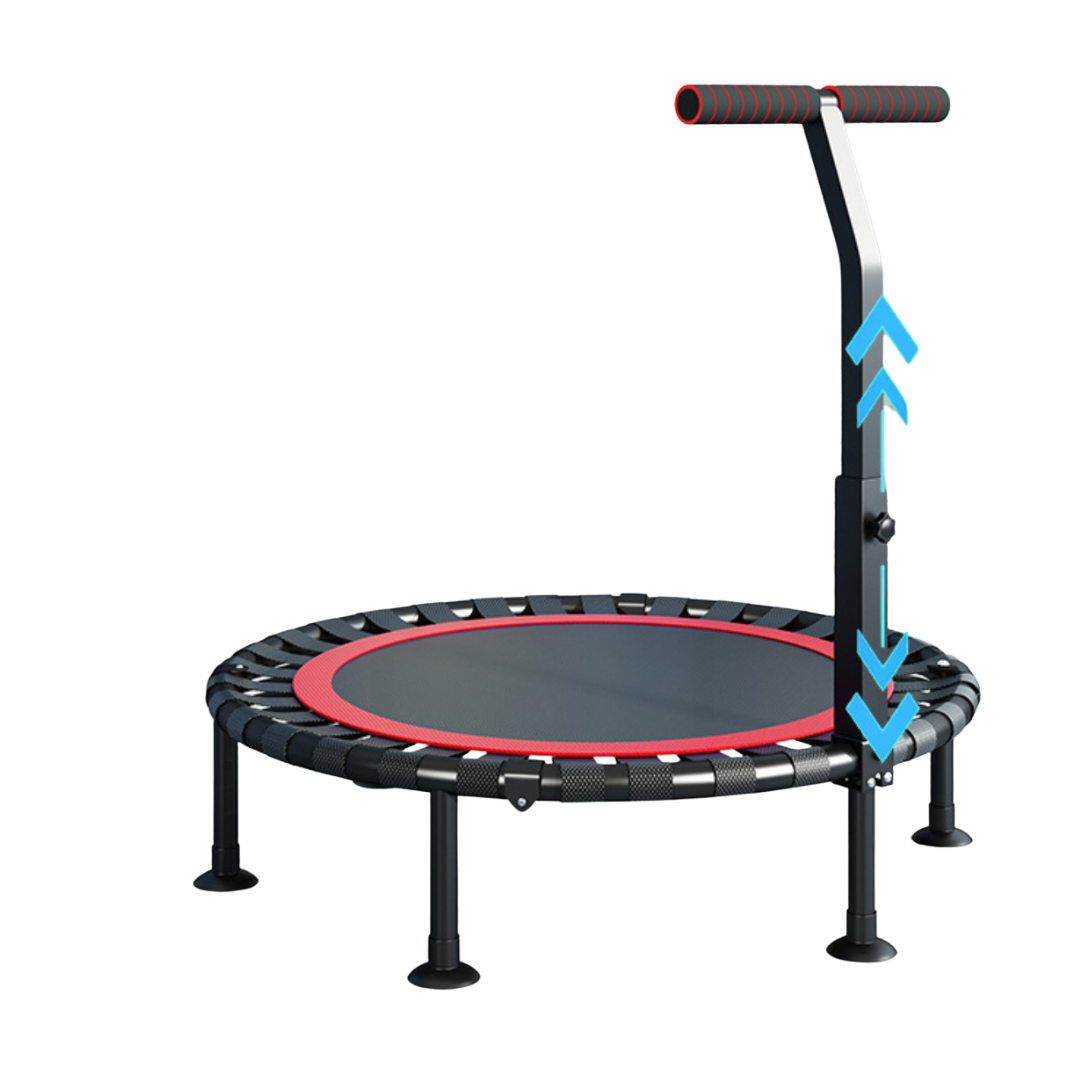
Happy Square currently carries foldable rebounder-style trampolines with different size and handle configurations. Its adjustable model includes a removable handle and an all-steel frame, with the product listing stating a maximum load of up to 150 kg.
For children who enjoy energetic movement, a trampoline can create a simple activity station.
You could introduce games such as:
- Jump and count
- Jump and freeze
- Copy a rhythm
- Five jumps, then step off
- Jump while identifying colours or numbers
This combines physical movement with simple play instructions.
Always follow the specific manufacturer's safety guidance and provide appropriate supervision.
3. Balance Boards and Wobble Equipment: For Stability
Balance is not just about standing still.
Children constantly make small body adjustments while walking, climbing, running and changing direction.
Balance equipment creates an environment where those adjustments become more noticeable.
Happy Square's current sensory and gross motor collections include wobble-style sitting equipment, balance boards and jumping balance products.
These can be useful for activities involving:
- Weight shifting
- Core stability
- Maintaining posture
- Standing balance
- Controlled movement
- Changing direction
For a child who does not enjoy strong spinning or bouncing sensations, a simple balance activity may also offer a gentler starting point.
4. Scooter Boards: For Movement Close to the Ground
A scooter board provides a very different movement experience.
Instead of standing, children can sit, kneel or lie close to the ground and use their arms or legs to move.
Happy Square's NDIS and sensory range includes sensory balance scooter boards designed for movement-based activities.
Possible play ideas include:
Treasure Delivery
Place lightweight objects at one end of a safe area and ask the child to transport them to the other.
Scooter Course
Create a simple straight or curved route using soft markers.
Pull-and-Go
An adult or partner can incorporate controlled pulling activities where the product instructions and environment allow it.
Because scooter boards move across the floor, adequate space and a clear play area are especially important.
5. Swings: For Rocking and Linear Movement
Swinging creates another type of movement input.
Happy Square currently offers several hanging and sensory swing options within its sensory and NDIS-focused ranges.
Depending on the product and setup, swinging activities can involve:
- Forward and backward movement
- Gentle rocking
- Maintaining body position
- Holding on
- Changing position
- Coordinating movement
Installation matters considerably with hanging equipment.
The mounting point, hardware, surrounding clearance and manufacturer's instructions all need to be considered before use.
For therapy-specific use, equipment choices and activities should follow the guidance of the child's relevant professional.
6. Therapy Balls: Simple but Versatile
You do not necessarily need complex equipment to create gross motor activities.
Happy Square's current range includes peanut-shaped therapy balls designed for balancing and movement activities.
Depending on the child's abilities and appropriate adult supervision, a therapy ball can be incorporated into:
- Supported balancing
- Reaching activities
- Rolling
- Weight shifting
- Sitting activities
- Simple obstacle courses
The advantage is versatility.
The same piece of equipment can often be used differently as a child's confidence and skills change.
7. Parachutes: Gross Motor Play Can Be Social Too
Gross motor skill learning does not have to be individual.
Happy Square also stocks children's play parachutes intended for cooperative group games.
Parachute activities can involve:
- Raising arms
- Lowering arms
- Walking
- Running
- Changing direction
- Coordinating movement with others
- Following simple instructions
This can make them particularly relevant for group environments such as schools, early-learning spaces or organised play sessions.
How to Choose the Right Equipment
Before purchasing, consider these six factors.
1. Start With the Child, Not the Product
Children can respond very differently to the same activity.
One child might actively seek spinning and bouncing.
Another might prefer slower, more predictable movement.
Happy Square itself notes in its sensory-space guidance that equipment should be selected according to individual needs, the intended activity, professional recommendations where relevant and the way the user responds.
Do not assume that because a product is labelled “sensory”, every child will enjoy or benefit from using it in the same way.
2. Decide What Movement You Want
Ask whether you want to encourage:
- Jumping
- Balancing
- Spinning
- Swinging
- Crawling
- Throwing
- Reaching
- Pushing
- Pulling
Once you know the movement, choosing equipment becomes much simpler.
3. Consider Your Available Space
A small wobble cushion requires very little space.
A trampoline requires significantly more.
A swing may require both horizontal clearance and suitable installation.
A scooter board needs safe floor space.
Measure the intended play area before purchasing, especially for larger gross motor equipment.
4. Check Product Specifications
Review:
- Dimensions
- Weight capacity
- Recommended user information
- Required assembly
- Installation requirements
- Materials
- Indoor/outdoor suitability
- Safety instructions
For example, Happy Square's current swivel chair lists a 75 kg maximum capacity, while its foldable trampoline listing states a maximum capacity of up to 150 kg. These figures apply to those specific listed products and should not be assumed for other models.
5. Think About Long-Term Variety
Children may lose interest if equipment only allows one activity.
Consider whether the product can become part of different games.
For example, instead of simply jumping on a trampoline, you might introduce counting, rhythm or stop-and-go games.
A balance board might become:
- A balance challenge
- Part of an obstacle course
- A stepping station
- A movement game
Variety can make a relatively simple piece of equipment useful in more than one way.
6. Ask a Professional When Needed
If you are choosing equipment for a child with identified developmental, physical or sensory needs, an occupational therapist, physiotherapist or other relevant health professional can help determine which activities are appropriate.
This is particularly important when equipment is intended to form part of a therapy program rather than general recreational play.
Formal Ayres Sensory Integration is a specific therapist-led intervention and should not be equated with simply purchasing sensory equipment.
Home vs School vs Clinic: The Right Equipment May Be Different
The environment also matters.
At Home
Priorities might include:
- Compact size
- Easy storage
- Simple supervision
- Multiple uses
- Easy cleaning
Foldable trampolines, balance equipment or compact swivel products may work well where space is limited.
At School
Schools might prioritise:
- Durability
- Multiple users
- Clear activity rules
- Easy cleaning
- Structured movement opportunities
- Storage between sessions
Happy Square provides dedicated school and organisation purchasing pathways as well as a collection aimed at schools and clinics.
In a Clinic
Equipment selection may be more closely connected to specific professional goals and individual assessments.
Happy Square's current product range includes equipment marketed toward clinic and therapist use, but professional judgement should determine how equipment is incorporated into therapy.
Do You Need Lots of Sensory Equipment?
No.
A useful movement space does not need to contain every available sensory product.
Happy Square's own sensory-space guide recommends beginning with the purpose of the space rather than filling it with equipment.
A simple setup might contain:
One active movement item
such as a trampoline
One balance item
such as a balance board
One lower-intensity option
such as a therapy ball or active sitting cushion
You can then expand the setup based on what is actually used.
This can be more practical than purchasing a large collection before understanding which activities suit the child.
Building a Simple Gross Motor Play Circuit
One way to use several pieces of equipment is to create a short movement circuit.
For example:
Station 1 — Balance
Walk across stepping points or use a balance board.
↓
Station 2 — Jump
Complete five controlled trampoline jumps.
↓
Station 3 — Crawl
Move through a tunnel or low obstacle.
↓
Station 4 — Rotate
Complete a short supervised swivel-chair activity.
↓
Station 5 — Throw
Throw a soft ball toward a target.
A circuit introduces different movement patterns without requiring a long session on any single activity.
The difficulty can also be adapted to the child's age, abilities and confidence.
How Happy Square Organises Its Range
One useful feature of the Happy Square website is that products are organised by skills and use cases rather than only by product type.
Current website categories include:
- Fine Motor Skills
- Cognitive Skills
- Sensory Stimulation
- Language Development
- Play Skills
- Gross Motor Skills
- Sensory Integration / Gross Motor Skill Training
- NDIS Funding Best Sellers
Within its gross motor and NDIS-focused collections, Happy Square currently features products including swivel chairs, trampolines, balance equipment, scooter boards, swings, therapy balls and group-play products.
This makes it easier to begin with the skill or activity you are interested in rather than searching through unrelated toys.
Final Thought
When choosing equipment for sensory integration and gross motor skill learning, there is no single product that every child needs.
A trampoline encourages a very different movement pattern from a balance board.
A swivel chair creates a different experience from a scooter board.
And a sensory swing serves a different purpose again.
The best starting point is to ask:
What movement does the child enjoy?
What skill are we trying to practise?
Where will the equipment be used?
Can it be used safely and appropriately in that space?
Start with purposeful equipment rather than simply buying more equipment.
For general play, look for activities that encourage children to move, explore and practise new physical skills in an enjoyable way. Australian child-development guidance consistently recognises active play and regular movement as important opportunities for children to build physical skills.
Where a child has specific sensory, developmental or therapeutic needs, equipment choices should be individualised and discussed with the relevant health professional.
Happy Square's Sensory Integration / Gross Motor Skill Training range provides Australian families, educators and clinics with a broad selection of equipment for building movement-based play environments.
Shop Sensory Integration & Gross Motor Play Equipment
Explore Happy Square's current range of:
- Sensory swivel chairs
- Kids trampolines and rebounders
- Balance equipment
- Scooter boards
- Sensory swings
- Therapy balls
- Sensory tunnels
- Cooperative play equipment
Happy Square also provides dedicated purchasing pathways for NDIS participants, schools, clinics and organisations.
Happy Square AU
Address:
Unit 6, 4 Vesper Dr
Narre Warren VIC 3805
Australia
Phone:
04 3075 0122
General Contact Email:
admin@happysquare.com.au
Happy Square's current contact page lists the Narre Warren address, phone number and general contact email above.
Ordering & Booking Details
Happy Square operates primarily as an online retailer rather than an appointment-based play or therapy centre, and the website does not currently advertise a public appointment-booking system.
Products can be ordered directly through the Happy Square website.
For schools, clinics and organisations, Happy Square provides a dedicated order/purchase-order pathway. For eligible NDIS-related purchases, the website also provides an NDIS funding process and asks customers to provide participant and plan-manager information where applicable.
Current product pages state that standard orders are generally processed within 1–3 business days, with shipping calculated according to the carrier and free shipping available on qualifying orders over $99.
Important: Happy Square supplies educational, play and sensory equipment. Product information should not be interpreted as medical advice or a guarantee of developmental or therapeutic outcomes.
