


Best Sensory Integration and Gross Motor Skill Training Equipment for Kids
Children learn a great deal through movement.
Running across the playground, balancing on a beam, jumping, climbing, spinning or reaching for an object might simply look like play. At the same time, these activities give children opportunities to practise controlling their bodies, coordinating movements and responding to different physical sensations.
This is where sensory integration and gross motor skill training can become part of everyday active play.
The challenge for parents, teachers and therapists is choosing the right equipment.
A trampoline, sensory swing, balance beam and spinner chair can all encourage movement, but they provide very different experiences.
Rather than looking for one product that does everything, it is often more useful to think about the movement or skill you want the child to practise.
Happy Square offers a dedicated range of sensory and gross motor equipment for children, with products designed for use at home, in schools, early-learning environments and therapy settings.
What Are Gross Motor Skills?
Gross motor skills involve movements that use the large muscles of the body.
They are used in everyday activities such as:
- Walking
- Running
- Jumping
- Climbing
- Balancing
- Throwing
- Catching
- Kicking
- Crawling
- Riding
- Changing direction
- Maintaining body position
As children grow, these movements gradually become more coordinated and controlled.
Movement-based play provides repeated opportunities for children to practise these skills in an enjoyable environment.
What Is Sensory Integration?
Children constantly receive information from their surroundings and their own bodies.
They process information relating to:
- Touch
- Movement
- Balance
- Body position
- Sight
- Sound
- Other sensory experiences
Sensory integration describes how the nervous system receives, processes and responds to this sensory information.
Movement activities can provide different types of sensory experiences.
For example, spinning and swinging can provide vestibular input associated with movement and balance, while pushing, climbing and balancing can involve proprioceptive input relating to body position and force.
Sensory-based activities should always be selected according to the individual child.
For children receiving occupational therapy or other professional support, parents and carers should follow the recommendations of the child's relevant health professional.
Why Movement-Based Play Matters
Children need opportunities to move.
Movement-based activities can encourage children to practise:
Balance
Staying stable while standing, moving or changing position.
Coordination
Using different parts of the body together.
Core control
Using the muscles around the trunk to support posture and movement.
Body awareness
Understanding where the body is positioned in space.
Motor planning
Thinking about and carrying out a sequence of movements.
Confidence
Trying new physical challenges and gradually becoming more comfortable with movement.
The goal does not need to be formal "training" every time.
For many children, simply having enjoyable ways to climb, jump, balance and move can provide valuable opportunities for physical practice.
https://happysquare.com.au/collections/kids-gym/products/sensory-integration-swivel-chair
Best Sensory Integration and Gross Motor Skill Training Equipment
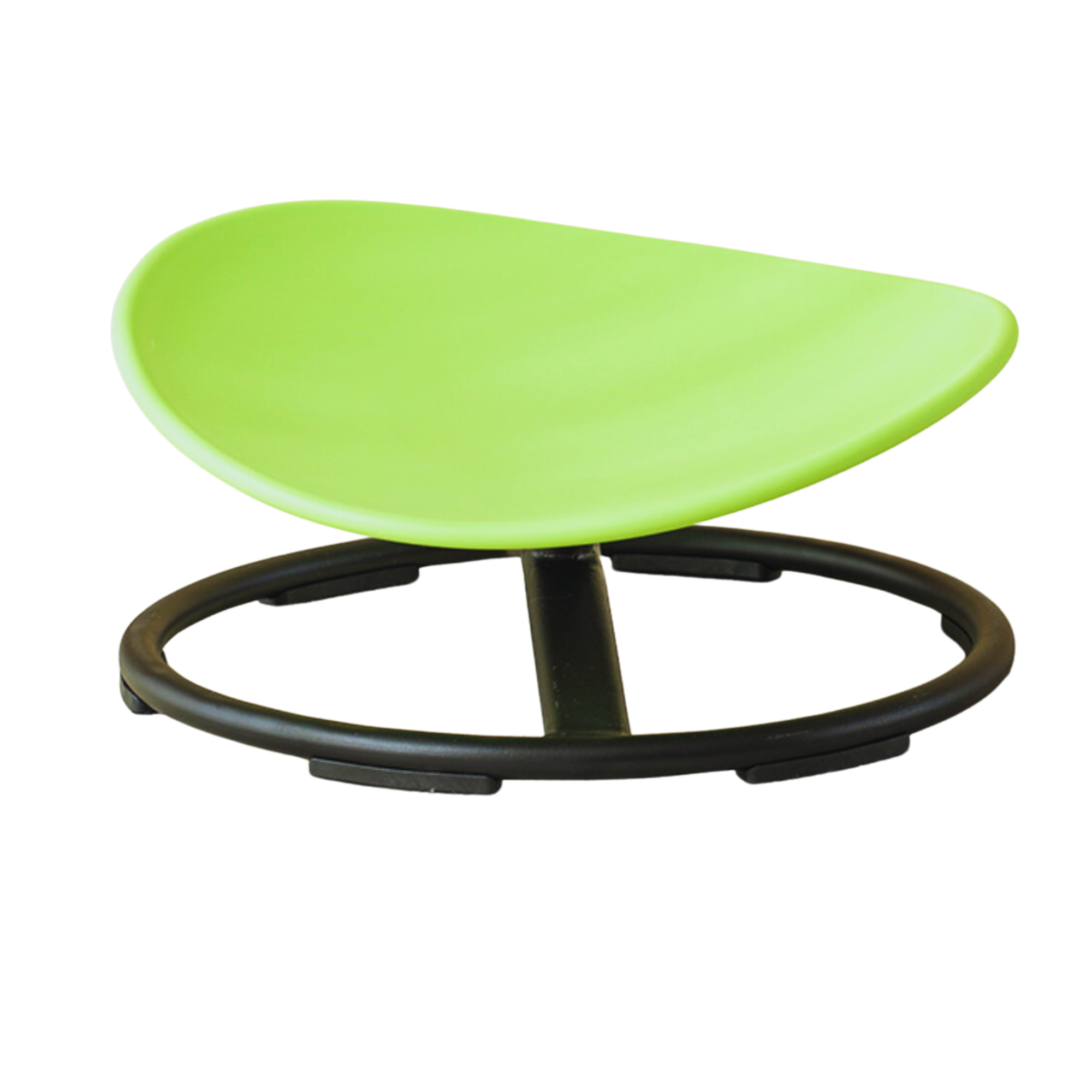
1. Sensory Swivel and Spinner Chairs
Spinning equipment can create an engaging movement experience while encouraging children to use their bodies to maintain position and control movement.
Happy Square offers sensory spinner and swivel-style equipment designed to encourage vestibular stimulation, balance and coordination activities.
Children may use this type of equipment while:
- Sitting
- Holding position
- Rotating
- Changing direction
- Controlling speed
- Coordinating the upper and lower body
Best For
- Vestibular movement activities
- Balance
- Body awareness
- Coordination
- Active sensory play
Spinner equipment can be particularly useful in a supervised sensory or movement space where children can participate at a pace appropriate for them.
2. Balance Beams
Balance beams are one of the simplest ways to turn gross motor practice into a game.
Children can walk from one end to another, step sideways, follow curved paths or combine multiple pieces to create different routes.
Happy Square offers modular balance beam options that can be arranged into quarter-circle, half-circle and full-circle configurations.
This gives parents, educators and therapists flexibility when building different movement activities.
Balance Beam Activities Can Encourage
- Dynamic balance
- Foot placement
- Coordination
- Postural control
- Concentration
- Motor planning
- Confidence with movement
You can also make activities more interesting by asking children to:
- Walk forwards
- Walk sideways
- Carry a lightweight object
- Stop at designated points
- Step over small obstacles
- Follow different shapes
The difficulty should always match the child's abilities.
3. Sensory Integration Training Sets
Sometimes it is more practical to have several different activities available instead of relying on one piece of equipment.
Happy Square offers a sensory integration training set designed around activities involving balance, hand-foot coordination, body awareness and concentration.
A multi-activity set can allow children to move between different challenges.
For example:
Activity 1: Balance
Activity 2: Reach and coordinate
Activity 3: Follow a movement sequence
Activity 4: Complete a simple obstacle challenge
Activity 5: Repeat the sequence with small variations
This approach can make movement sessions more varied and engaging.
Best For
- Home activity areas
- Occupational therapy environments
- Schools
- Early-learning centres
- Structured movement sessions
4. Trampolines
Jumping is a powerful whole-body activity.
When children bounce, they repeatedly bend and straighten their legs while controlling their body position.
This can provide opportunities to practise:
- Leg strength
- Balance
- Rhythm
- Coordination
- Body control
- Core stability
A trampoline can also turn repetitive movement into enjoyable active play.
Simple Trampoline Activities
Instead of only jumping continuously, children can try activities such as:
Jump and Stop
Jump several times and freeze when instructed.
Count the Jumps
Jump while counting from one to ten.
High and Low
Alternate between small and larger controlled jumps.
Follow the Pattern
Jump twice, stop, turn and repeat.
These simple variations can combine movement with listening, counting and sequencing skills.
Adult supervision and the manufacturer's safety instructions are essential whenever children use trampoline equipment.
5. Sensory Swings
Swings create movement in different directions and can be used in sensory and gross motor activities.
Depending on the swing and activity, children may need to:
- Hold their position
- Adjust their body
- Grip the swing
- Maintain balance
- Coordinate movement
- Respond to changes in direction
For children who enjoy movement-based play, swinging can create an engaging sensory experience.
Best For
- Movement play
- Vestibular input
- Balance challenges
- Body awareness
- Core engagement
Swing equipment should always be installed correctly and used according to weight limits and safety instructions.
https://happysquare.com.au/collections/kids-gym/products/therapy-tool-sensory-balance-scooter-board
6. Scooter Boards
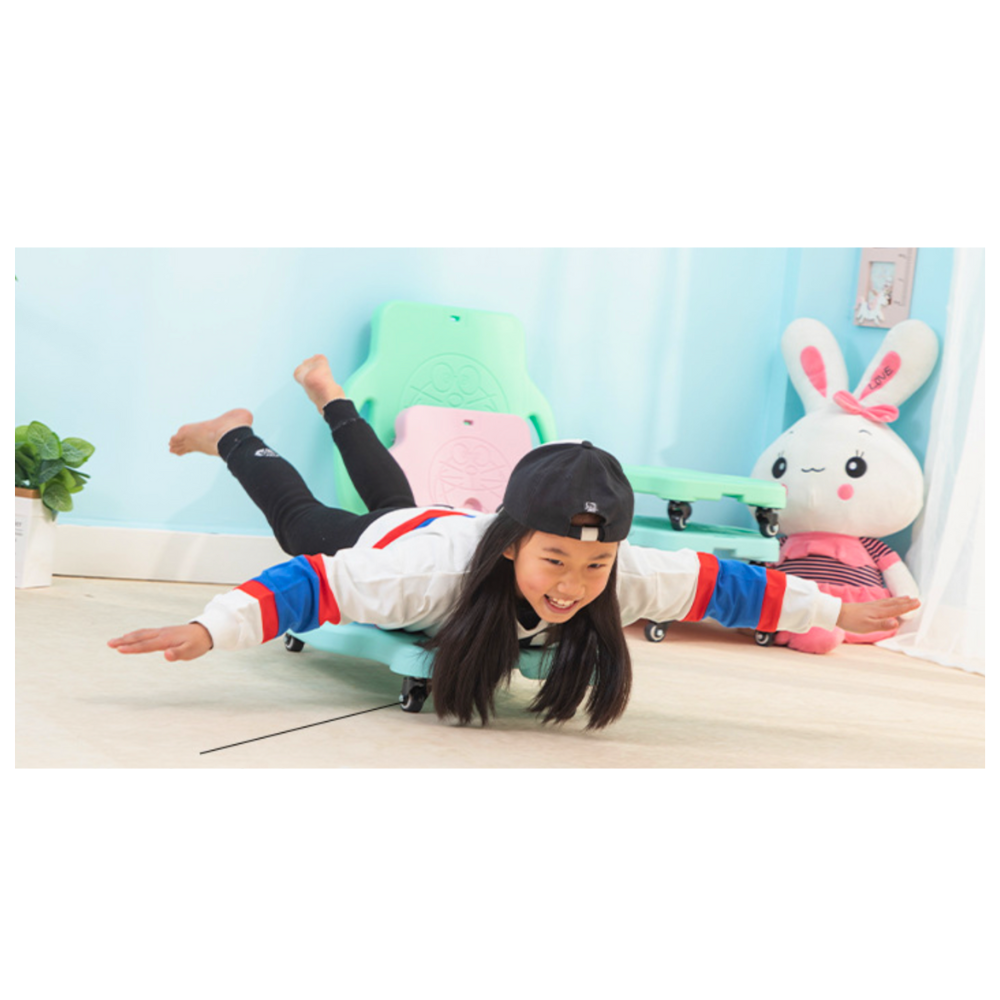
Scooter boards encourage children to move close to the floor using their arms, legs or both.
They can be incorporated into games such as:
- Moving between cones
- Collecting objects
- Following pathways
- Relay activities
- Reaching for targets
- Completing obstacle courses
Depending on how the board is used, these activities may encourage coordination, upper-body movement and motor planning.
They can also add variety to a sensory or gross motor activity space.
7. Balance Boards
A balance board creates an unstable surface that requires the child to continually make small adjustments.
Depending on the design and the child's ability, balance boards can create opportunities to practise:
- Postural control
- Balance
- Coordination
- Weight shifting
- Core engagement
- Body awareness
A simple balance activity can gradually become more challenging.
For example:
Stage 1: Stand with assistance.
Stage 2: Maintain balance independently.
Stage 3: Reach for an object.
Stage 4: Move an object from one side to another.
Stage 5: Add a simple throwing or catching activity.
Progress should always be based on the child's ability rather than age alone.
8. Obstacle Course Equipment
Children often enjoy gross motor activities more when they feel like a challenge or game.
An obstacle course can combine several types of equipment.
For example:
Step 1: Walk across a balance beam.
Step 2: Crawl through a tunnel.
Step 3: Complete five trampoline jumps.
Step 4: Move along on a scooter board.
Step 5: Balance on a board.
Step 6: Finish with a throwing activity.
One activity can therefore involve several different types of movement.
The course can also be changed regularly to keep it interesting.
Sensory Integration and Gross Motor Skill Training Data
Movement is an important part of children's development.
Australian parenting guidance recommends that preschool children accumulate at least three hours of physical activity throughout each day, including energetic play. Movement activities such as running, jumping and active play support physical development and give children opportunities to practise motor skills.
| Development Area | Examples of Movement Activities |
|---|---|
| Balance | Balance beams, balance boards, stepping activities |
| Coordination | Scooter boards, obstacle courses, throwing and catching |
| Core control | Swings, balance equipment, climbing |
| Leg movement | Jumping, trampolines, stepping |
| Body awareness | Spinner equipment, obstacle courses, balance activities |
| Motor planning | Movement sequences and obstacle courses |
| Vestibular movement | Swings and spinner equipment |
| Active play | Trampolines, climbing, running and movement games |
Australian child-development resources also note that physical activity can support children's coordination, balance, posture, flexibility and gross motor skills.
The important point is that development comes from repeated opportunities to move and practise.
No single piece of equipment develops every skill.
Choosing Equipment by Development Goal
Instead of starting with the product, start with the goal.
| If You Want to Encourage | Consider |
| Balance | Balance beam or balance board |
| Jumping | Trampoline |
| Spinning movement | Spinner or swivel chair |
| Swinging movement | Sensory swing |
| Motor planning | Obstacle course |
| Whole-body coordination | Sensory training set |
| Floor-based movement | Scooter board |
| Multiple movement activities | Combined sensory equipment |
This makes it easier to build a play environment around the child's actual needs.
Creating a Sensory and Gross Motor Activity Area at Home
You do not necessarily need a large playroom.
A small activity space can work well when equipment is selected carefully.
Start with one or two activities.
For example:
Balance Station
A balance board or beam.
Movement Station
A spinner chair or swing.
Jumping Station
A trampoline.
Floor Activity Station
A scooter board.
Equipment can then be rotated so children have different movement experiences without overcrowding the room.
Sensory Equipment for Schools and Clinics
Schools, early-learning centres and therapy clinics may need equipment that can support multiple children and different activities.
Useful considerations include:
- Available floor space
- Age range
- Weight limits
- Storage
- Cleaning
- Durability
- Supervision requirements
- Intended activities
- Ease of changing activities
Happy Square provides options for schools, clinics and organisations, including purchase-order and trade-account enquiry pathways.
When purchasing for a professional environment, it is often helpful to create a list of the skills and activities required before choosing products.
What About NDIS Funding?
Happy Square provides information and ordering support for customers considering purchases using NDIS funding.
However, it is important to understand that a product being described as sensory or therapeutic equipment does not automatically mean that the NDIS will fund it.
Whether equipment can be funded depends on factors including:
- The participant's disability
- Their individual needs
- Their plan
- The purpose of the equipment
- Whether it meets current NDIS funding rules
The NDIS specifically notes that ordinary indoor or outdoor play equipment is generally not automatically considered an NDIS support.
If you are considering a purchase using NDIS funding, check your individual plan requirements and, where appropriate, discuss the equipment with your support coordinator, plan manager or treating professional before ordering.
How to Choose the Right Equipment for Your Child
Before purchasing sensory integration or gross motor equipment, ask these questions.
1. What Movement Does My Child Enjoy?
Some children enjoy:
- Jumping
- Spinning
- Swinging
- Climbing
- Balancing
- Pushing
- Pulling
Understanding what already motivates the child can make it easier to encourage active play.
2. What Skill Are We Practising?
Avoid buying equipment simply because it is labelled "sensory."
Instead, identify the goal.
Are you trying to create opportunities for:
- Balance?
- Coordination?
- Jumping?
- Movement?
- Motor planning?
- Body awareness?
This makes product selection more purposeful.
3. Where Will the Equipment Be Used?
Measure the available area before purchasing.
Consider:
- Indoor versus outdoor use
- Ceiling height
- Floor space
- Clearance around equipment
- Storage
- Installation requirements
4. Is It Appropriate for the Child?
Always check:
- Recommended age
- Weight limits
- Product dimensions
- Safety information
- Installation instructions
Supervision may also be required depending on the equipment.
5. Has a Therapist Recommended Something Specific?
If a child is working with an occupational therapist, physiotherapist or another healthcare professional, their recommendations should guide equipment choices intended for therapeutic purposes.
Why Choose Happy Square?
Happy Square offers educational, sensory and active-play products for Australian families, schools, clinics and organisations.
Its Sensory Integration / Gross Motor Skill Training range includes products such as:
- Sensory spinner equipment
- Swivel chairs
- Sensory swings
- Trampolines
- Balance beams
- Balance boards
- Scooter boards
- Sensory integration training sets
- Coordination equipment
- Movement-based educational tools
Customers can shop directly online, while schools and organisations can also enquire about purchase orders and trade accounts.
This makes it easier to select equipment according to the environment in which it will actually be used.
Ordering & Enquiry Details
Happy Square operates as an online store, so there is no traditional appointment or booking requirement for standard product purchases.
Products can be ordered directly through the Happy Square website.
For schools, clinics, NDIS-related enquiries or larger organisational orders, customers can contact the Happy Square team before purchasing.
Contact Happy Square
Address:
Unit 6, 4 Vesper Drive
Narre Warren VIC 3805
Australia
Phone:
0430 750 122
Email:
happysquareau@outlook.com
For Schools, Clinics and Organisations
Happy Square also provides dedicated options for:
- School purchase orders
- Organisation purchase orders
- Clinic enquiries
- NDIS-related purchasing enquiries
- School and clinic trade-account applications
When contacting Happy Square, it can help to provide:
- The products you are interested in
- Required quantities
- School, clinic or organisation name
- Delivery postcode
- Purchase-order requirements
- Relevant NDIS purchasing information where applicable
- Your contact details
The Happy Square team can then assist with the appropriate ordering process.
Final Thought
The best sensory integration and gross motor skill training equipment for kids is not necessarily the largest or most complex product.
It is equipment that gives the child an appropriate opportunity to move, explore and practise skills.
For one child, that might be balancing carefully along a beam.
For another, it might be jumping on a trampoline, travelling on a scooter board or enjoying controlled swinging and spinning activities.
The key is to match the activity to the child rather than expecting the child to match the equipment.
By combining age-appropriate equipment with active play, supervision and professional guidance when required, parents, educators and therapists can create engaging environments where children have more opportunities to develop confidence through movement.
Explore Happy Square's Sensory Integration / Gross Motor Skill Training range to find equipment for home, school, clinic and active-play environments.
